
February 5, 2026
How to Pay for College Without Debt
Introduction: College Doesn’t Have to Mean Crippling Debt
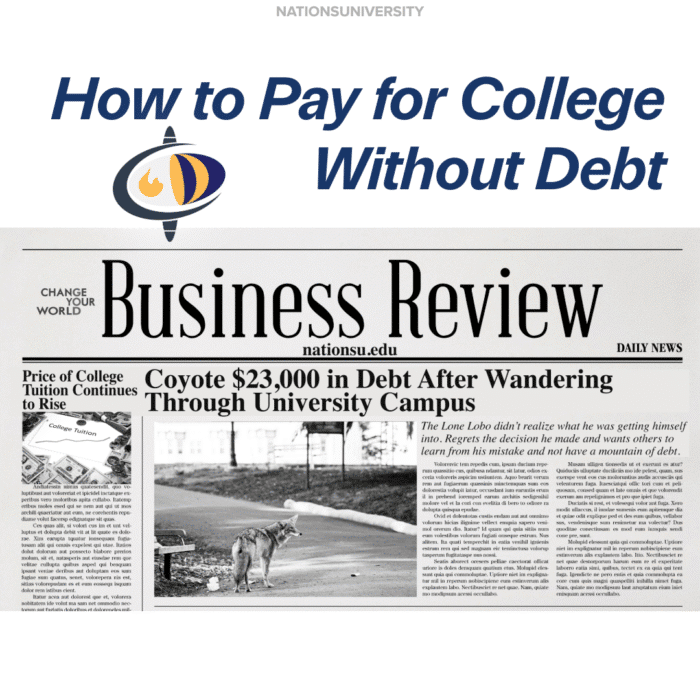
Years ago, I created the humorous illustration you see in the header of this blog. At NationsU, we were trying to come up with ideas on how we can communicate the affordability of getting an education at NU. The question foremost in our minds was how to pay for college without debt. Fastforward twelve years, and the anxiety of student loan debt and who is responsible for paying it is at an all-time high.
The Uninvited Companion of Student Loan Debt
Student loans have a way of becoming an uninvited companion. They follow people long after commencement caps and gowns are packed away, into career decisions, family planning, ministry opportunities, and sometimes even retirement. For many prospective students, the anxiety begins before the first class is ever taken. The question is rarely whether debt will be required, but how much and for how long. That quiet unease has become so common that it is almost expected.
Somehow, we have accepted the idea that debt is simply the cost of going to college. Students are told that it is an investment, framed as unavoidable, and often dismissed with a shrug: that’s just how it works. Yet this assumption deserves to be challenged. For countless graduates, student loans do not feel like an investment at all. They feel like an anchor that limits mobility, delays generosity, and constrains the freedom to pursue vocations rooted in service rather than salary.
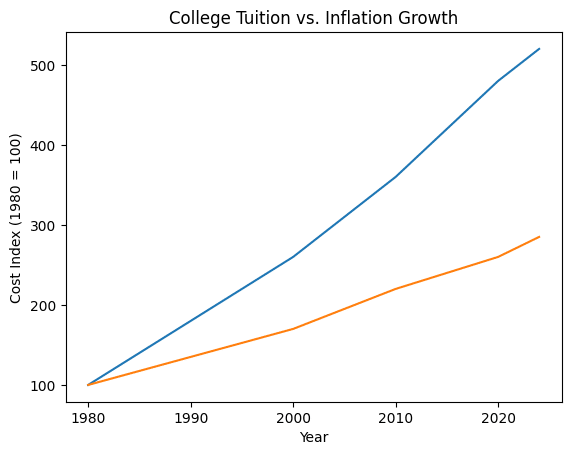
Based on data from the U.S. Bureau of Labor Statistics (BLS) and reports from the Education Data Initiative, college tuition and fees have increased by over 1,200% since 1980, while general consumer prices (CPI) rose by roughly 300%. This indicates that tuition costs have grown roughly four times faster than general inflation during that period.
A Different Path Is Still Possible
However, this narrative is not inevitable. There are other paths—paths that do not require mortgaging one’s future for an education. Debt-free and low-debt approaches to college are not relics of the past, nor are they reserved for the wealthy or the unusually fortunate. They are practical, attainable options, particularly for adult learners returning to school, ministry leaders seeking preparation without financial entanglement, and international students navigating limited resources.
Why Affordable Education Matters for Adult Learners
For over thirty years, NationsU has been a great opportunity for adult learners who lack funds or the time to attend a traditional brick-and-mortar school. Many of our students were in a job that supported a household, and pulling up roots to attend school would result in a loss of income that they could not afford. Typically, they were transitioning from a secular job and entering a ministry field they felt called to, and NationsUniversity made that an easy possibility that they could afford.
This series of posts will explore those alternatives carefully and realistically. Rather than offering abstract theory, it will focus on strategies that have proven effective: choosing institutions wisely, paying as you go, leveraging community support, and redefining what “affordable” truly means in higher education. These are not shortcuts; they are thoughtful decisions rooted in Christian values of stewardship and long-term vision.
Education for Service, Not Lifelong De
There are also living examples of this approach at work. NationsUniversity exists to build the Kingdom of God and is a reminder that education can be both rigorous and accessible, mission-driven rather than profit-centered. University founders, Mac Lynn and Dick Ady, built a model that reflects a simple conviction they held: preparation for service should not come at the cost of lifelong financial burden.
For those who sense a calling but hesitate because of debt, or who wonder if education and financial faithfulness can coexist, this conversation matters. College without crippling debt is not an illusion. It is a deliberate choice—and one worth understanding before the first loan is ever signed.
Coming Up in This Series
In the posts ahead, we’ll explore practical ways to pursue a college education without taking on long-term debt. We’ll look at how to choose affordable institutions, pay as you go, and rethink common assumptions about the true cost of higher education—especially for adult learners and those called to ministry.
If you’re asking whether education and financial faithfulness can coexist, this series will help you answer that question before the first loan is ever signed.
Author: Jon-Roy Sloan is the Chief Communications Officer for NationsUniversity and the author of Anastasia Smiles: Love Needs No Translation. Disclaimer statement: Please note that the opinions expressed herein are those of the author alone and are based on his personal understanding of scripture and how God works in our lives and do not necessarily reflect the views of NationsUniversity®.