
July 16, 2025
Children are a Blessing
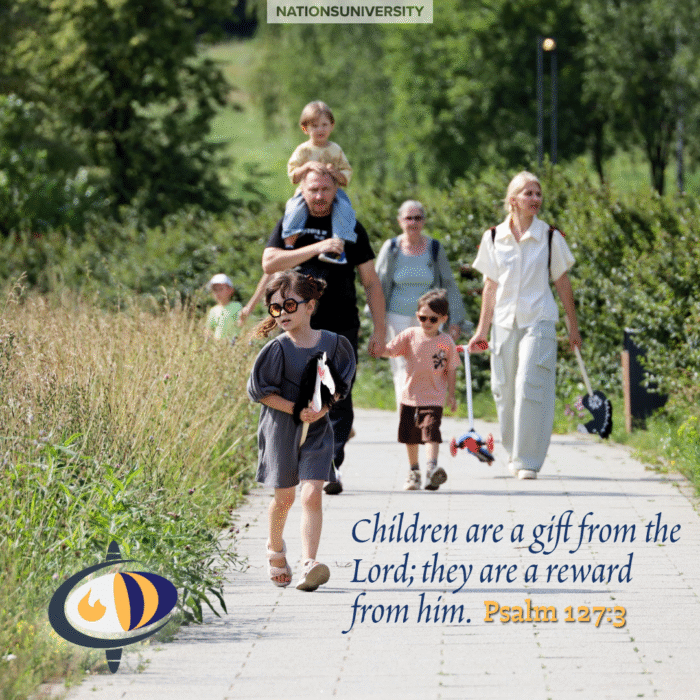
Children as a Gift, Not a Formula
Children are a blessing, and being a parent is a privilege. The Bible presents a very positive view of having children, but it is important to note that it doesn’t specify a particular number that parents should strive for. In the very beginning, we are encouraged to be fruitful and to multiply, filling the earth. Children are the most complicated thing that you will ever be responsible for. They are little for only four to five years. Children are young once, and you do not get any do-overs. They just keep growing and advancing, so this time is very special.
A couple should talk about how many children they would desire. Try to minimize your financial requirements so that you have more discretionary spending. Peacefully come to a consensus and try not to feel too guilty if things don’t work out.
A Culture That Devalues Children
Sadly, we see a misanthropic view of this blessing. Many extreme environmentalists view that the human impact on the planet is harmful and that mankind is a cancer or parasite feeding off of the earth. This leads to destructive ideologies; it raises terrible questions: “What do you do with cancer?” And the obvious answer is, “You kill it.” This raises the next question, “Where do you start?” Mothers are caught in a societal quandary; if they stay at home — it’s wrong; if they go to work — it’s wrong.
Rethinking the “One Child” Model
Let’s leave those questions to the secularists. We have a command, from the very beginning, to have children. I can only surmise that the only wrong number is one. That seems a little extreme until you think about that. One child is very demanding because that one child has no playmates. I was amazed at how easy it was to babysit other children when Maria and I only had one child. The children formed relationships, went right to the business of playing, and even invented games. They didn’t need me or any other adult for anything unless there was a conflict.
Plainly put, if you have one child, you have the problem of having to amuse the child all of the time. The child does not get the benefit of having siblings to play with, get in fights with, share toys, and eat together. They miss out on the benefit of having to problem-solve conflicts at their level. They don’t get the privilege of being responsible and looking after a younger human being.
Learning from Jesus’ View of Children
Instead of focusing on how many children a couple should have, I want to talk about what parents can learn from children by looking at how Jesus interacted with children. Remember, children are a gift from God; they are a reward from Him (Ps. 127:3).
Jesus understood this gift and interacted with children in a radical way for his day. He valued them greatly, and he compared our faith to theirs. Jesus told his disciples not to turn away the children but to let them come to him, for they belong within the kingdom of heaven (Lk 18:16), and he blessed them (Mt. 19:13–14). Jesus fed the five thousand through a child. Jesus only raised three people from the dead in his ministry, and two of them were children, a boy and a girl. Jesus immediately provided food for the young girl after her resurrection, revealing how he provides care not only for her spiritual needs but also her physical needs.
Parenting by Encouragement and Formation
What do we learn from Jesus, the parent? We need to encourage and develop our children’s traits. He highlighted humility and created a space for the children. However small, he gave them the opportunity to participate in his ministry. He did this by focusing on what they had to offer, not what they lacked. In the same way, we need to focus on finding and developing our children’s individual traits and interests. It is less about what we want and more about what they need. As your child discovers their interests and gifts, you can support them within the framework of family and challenge their problem-solving skills or collaboration with their siblings. Lastly, after caring for the immediate needs of food, clothing, and shelter, you must provide for their spiritual needs. Introduce them to Jesus and the Bible.
Author: Jon-Roy Sloan is the Chief Communications Officer for NationsUniversity and the author of Anastasia Smiles: Love Needs No Translation. Disclaimer statement: Please note that the opinions expressed herein are those of the author alone and are based on his personal understanding of scripture and how God works in our lives and do not necessarily reflect the views of NationsUniversity®.
Article 19, Family Policy Series – 301 Number of Children